Writing About Your Hometown: A Local Angle for Short Fiction
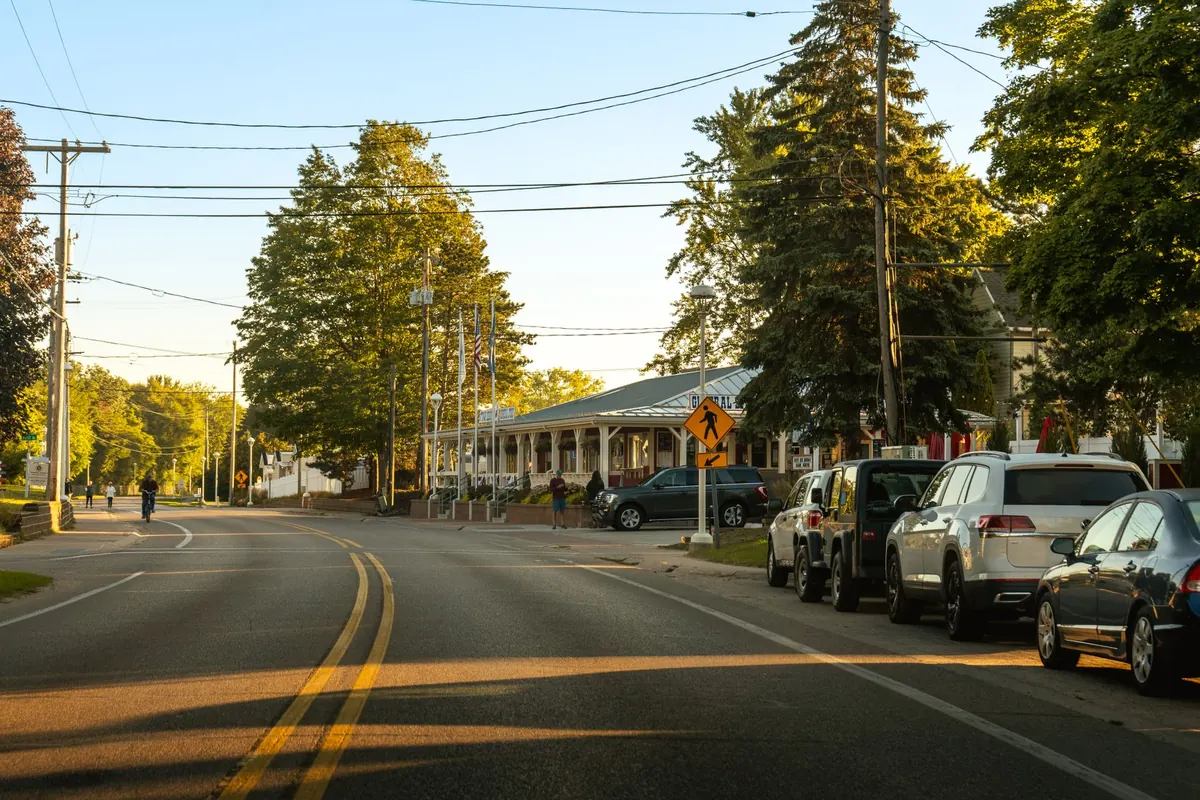
Why do so many first short stories start at home? Not nostalgia. It's practical. The hometown is the one place where you already know which corner the wind cuts around, which cashier counts change slowly, and which street goes quiet after nine. You don't have to build a world from nothing; you only have to look at it hard enough.
That advantage evaporates fast, though, if you treat memory as atmosphere. A story set "in my town" is not the same as a story set on Ferris Street, at the municipal pool, the summer the filter broke and nobody fixed it until August. The sections below are about turning the place you know into somewhere a stranger can stand.
Short fiction runs on a handful of well-chosen details. In two thousand words you have to make a reader believe in a street, a marriage, and a Tuesday afternoon. Inventing all of that from scratch is work. Remembering it takes a walk.
Put the two versions side by side. "She waited by the pool" is a stage direction. "She waited by the shallow end, where the tiles had come loose and the life guard sat with his shoes off" is a place. Neither sentence is better prose, but the second one is doing three jobs at once: it locates us, it tells us what kind of town this is, and it hints at how the town treats the things it owns.
The same rule applies to people and objects. A landmark is a fact. A detail is a fact with a person attached to it — the bench where the night shift waits for the first bus, the bakery that starts baking at four but doesn't unlock the door until five past, the hardware shop that still keeps a paper ledger because the owner doesn't trust the new system.
Before you write a sentence, sketch the geography your character actually moves through. Not the whole town. Their town. This takes about twenty minutes and saves hours of vague scene-setting later.
That fifth point matters more than it sounds. Loyalty to real geography can strangle a story. A character who needs to run into someone on the way to work will do it far more believably if you're allowed to shorten the walk.
A town is mostly repetition. The market on Saturday, the school run at half eight, the shift change at the plant, the same four people in the same café at the same hour. Repetition is a gift to a short story, because it gives you something to break.
If your character always takes the 6:40, a reader understands without being told that something has shifted when she takes the 7:05. If the neighbour always waters his lawn on a Sunday and this Sunday he doesn't, you have a whole story opening in one image, no exposition required.
Routines also give you texture for free. A shift pattern tells you about class and exhaustion. A closing-down sale tells you about the local economy without a paragraph of explanation. The bowling club's dwindling membership tells you who stayed and who left. None of these need commentary — they just need to be shown doing their ordinary work.
The characters around you are the most tempting and most dangerous material in the drawer. Use them, but build composites rather than portraits. Take one person's job, another's way of talking, a third's habit of arriving early and saying nothing. Change hair, age, family setup, the make of car. The result will feel true to readers who've never met anyone involved, and unrecognisable to the people who have.
Small places read closely. Someone will always think they've been written into a story, correctly or not. Change the identifying details before you have to defend them, and don't hand a neighbour a set of unflattering traits that only fit one person on the street. If a manuscript could genuinely harm someone's reputation, that's a question for a lawyer rather than a writing guide — but most of it is solved earlier, by fictionalising generously.
Get the speech right, though. Not transcribed, not phonetic, just accurate. One or two local words per page, placed where a character would actually reach for them. The moment dialect becomes a performance, readers stop hearing the person and start hearing the writing.
Place names, shop names, the odd bit of slang — these are your cheapest authenticity. Invent business names rather than using real ones, and let the invented name carry the local flavour: the Blue Bell, Ferris Motors, the Railway Arms.
The 6:40 came in with its one bad window, and Vera counted the people getting off the way she counted everything that week: four, then a gap, then the boy carrying the sandwich board for the phone shop that had closed in March.
Notice what isn't there. No explanation of the 6:40, no gloss on why a closed shop still has a board. The narrator trusts the reader, and the trust is what makes the place feel inhabited.
Writers often worry that a story rooted in one small town won't reach anyone who hasn't been there. It's the reverse. Precision is what travels. A reader in another country may never have seen a municipal pool with loose tiles, but they've all stood somewhere waiting for someone who was late.
The failure mode is over-explaining: pausing the story to tell us that the town is in the north, that the mill closed in the eighties, that everyone knows everyone. All of that can be implied by one character refusing to sit in a certain chair. Resist the footnote. If a detail needs a paragraph of context, either cut it or let a character get it wrong in dialogue — which is more interesting anyway.
You don't need a plan for a whole story. You need one place, one routine, and one small disruption.
Do that five times with different places and you'll have five openings, at least one of which will nag at you until you finish it. That's usually how it works: the town supplies the setting and the habits, and the story arrives as the thing that interrupts them.
Photo: fish socks / Pexels
Previous Post
10 Common Mistakes New Short Story Writers Make (and How to Fix Them)
Next Post
7 Questions to Ask Before Submitting to a Literary Magazine